- The Game Changer Newsletter
- Posts
- Why Every Athlete Needs a Mentor (and Why It Can’t Be You)
Why Every Athlete Needs a Mentor (and Why It Can’t Be You)
No one is coming to save you!

The Game Changer
September 11, 2025
Friday Fuel September 12
As parents, we pour everything we have into helping our kids succeed — we drive them, pay for them, feed them, coach them, cheer them on, drill them in skills, correct them, encourage them… but there comes a point when, even through they love us and respect us, they stop listening.
It’s not because we’ve failed, but because what they need has shifted. They need someone else. Someone removed from home. Someone they can hear, respect, and trust without all the family weight.
It turns out, that “someone else” matters more than we might realise.
A growing body of sports research confirms that mentorship isn’t just “nice to have” — it may be essential. Studies show that young athletes who have mentors show not only improved physical performance and technical skills, but also stronger resilience, confidence, leadership, and life skills.
Every single person we have had on our podcast has mentioned the need for a mentor to reach a high level. What this tells us is that you need more than natural talent + hard work. You need someone outside your immediate family and friend group who sees your potential, points out what you don’t see, and helps you bridge the gap between “good” and “great.”
In this issue, we’ll explore why parents can’t always be the mentor, how mentorship changes the game, and how to find (or become) the right mentor.
Let’s dive in.
🗝️ A Personal Story
I can clearly look back at my time in sports and see that I needed a mentor. I was talented enough in sport to make it so far but if I am totally honest with myself I was always looking for someone to come and put an arm around my shoulder and show me what real success looked like. I guess I was waiting to be saved. The problem is…no one is coming to save you. You have to drive this yourself, and if I had been honest with myself and found myself a mentor that could guide me and hold me accountable, then I could have gone much further.
As a parent, I’ve just started to realise this as well. I have a really close relationship with my boys and have coached them in many sports. It is only recently that I came to the conclusion that the boys need someone other than me, and probably have for a few years now. Having formed a relationship with performance coach, Erik Panzer, one of my boys, Sam, has started to work with him. Look, it is early in their relationship and I think they have only met 4 times, but it is clear to see that Erik is having an effect on Sam. He is holding him accountable and Sam is responding to his ideas and guidance in a way that he never has with me, and we are noticing big changes in a range of areas. Many of the ideas are things that my wife and I have spoken with Sam about, but it has taken a mentor to actually unlock the actions of success. Yes, we pay for this mentorship but it is worth every cent and I can’t speak more highly of the mentorship Erik is providing.
Don’t just take it from me though - this it what some of the expert say.
🥋 What the Experts Say
When we spoke with leading athlete developer Dr, Craig Harrison, the one piece of advice he chose for athletes was to get a mentor. Hear him speak about it here:
David Galbraith said the same and, in fact, one of his three pillars of committing fully to the dream is to “Get a World Class Mentor” - not just someone outside your circle but someone great to drive true success.
David says that massive momentum and power can come from linking in with the right mentor. It is so important that it is a non-negotiable for any athlete and team that he works with.
Taking a step back and looking at the wider field of success, when you research the best in any field there is always one thing in common that they have: they all have a professional mentor.
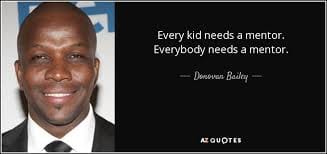
The other point that both of these experts were very clear on? The mentor cannot be a family member nor a close friend or family friend, or immediate coach.
🧑🤝🧑 Why Can’t I Be My Child’s Mentor?
As parents, we want to guide our kids every step of the way. But research shows that when it comes to mentorship, we’re not the best fit. Here’s why:
✨ Role Confusion — You’re already the caregiver and disciplinarian. Mixing in “mentor” blurs the lines and can strain the relationship. We also love our kids so much that we often let them get away with things that undermine their potential.
✨ Perceived Pressure — Even well-meant advice often feels like criticism when it comes from a parent. Kids hear pressure, not guidance.
✨ Independence — Teens naturally push for space from parents. Mentors give them a “safe other” who they can trust without family baggage.
✨ Fresh Perspective — Mentors can say the same thing a parent does, but it lands differently because it comes from someone outside the home.
✨ Expertise — The right mentor has likely walked the path your athlete wants to walk. They already know what works and what doesn’t. Unless you’ve done that yourself, you will be holding your child back.
✨ New Opportunities — Good mentors expand your child’s network, confidence, and perspective in ways family members usually can’t.
👉 Takeaway: Parents are the foundation of love and support. Mentors are the outside voices who help kids unlock their next level. Your job isn’t to be both — it’s to make sure both roles exist.
❓️ So Who Should be The Mentor?
In short, an expert without an agenda for your child. Someone who can hold a mirror up to them and keep them accountable. To take it further, a great mentor would:
Keep the athlete honest and doing what they said they would do - both long-term strategic steps to success as well as shorter-term goals, right down to the daily schedule.
Maintain a close eye over their development, ensuring things happen at the right time and speed, and in the right way to the right quality.
Not let them off the hook, challenging any excuses, whining or whinging they may have.
Guide and make sure the strategic steps and goals are appropriate.

✅ How to Select a Mentor
The fastest way to learn anything in life is to spend time with the very best in whatever area you are trying to master. Therefore, the best mentor would be the person in the world who is the greatest at what they do. David Galbraith feels you should access the highest possible mentor - someone who the very thought of asking makes you feel nervous or scared.
There may be some limits like distance, money and time, but the key point here is that every time you settle for someone less than great, you are limiting what the mentor is able to do for your child.
David has had athletes link with mentors who seemed far out of reach but were actually happy to take on the role when asked.
To decide who is right try this process with your athlete:
Build a list - if you had no limits in the world at all, who would you want to mentor you? (list and rank at least 5)
Write a shortlist of 5 strategies for how you would link in with the first ranked on your list (this might look like finding out where they are based, contacting their agent/agency, setting up a meeting, driving/flying to meet them etc)
Write down some benefits you will get from linking with this person - it could be added motivation, detailed advice, pride from taking the step etc
Contact them.
If they say no ask - “Who would you suggest I link with?”
✍️ Final Word
As Dr. Craig Harrison often notes on The Athlete Development Show, kids don’t just need more instructions—they need mentors who facilitate growth, build the right environment, and help them own their development, which is why an outside voice lands when a parent’s doesn’t.
You can’t be your child’s mentor. But you can create the conditions for one. Don’t leave it to chance. Make mentorship happen.
Here’s to linking with someone amazing,
See you next week,
— Billinda & Ben
FYA - Fueling Youth Athletes
🎙️ Home of The Game Changer Podcast
📺️Youtube: @TheGameChangerYouthPerformance
📘 Join our FYA Facebook Community
📸 Instagram: @fya_fueling_youth_athletes